
Mineral Collecting with The Mineralogical Record
An important first step in a wonderful journey
Why we don’t call them “rocks” or “rock collecting”
We generally don’t like calling mineral specimens “rocks” because rocks are a naturally occurring mixture of multiple minerals. Minerals are individual, pure chemical compounds with a specific crystal structure. Granite, for example, is a rock composed of interlocking mineral crystals of quartz, feldspar and mica. If you look at a piece of granite under magnification, you can usually see the individual crystal grains of white quartz, pink feldspar, and black mica.
“Rock Collecting” has almost always referred to the physical gathering of minerals or rocks from the “field”- the ground, cliff, stream, hole, cave, quarry or mine in which minerals or rocks are found. Among experienced collectors and professionals, this activity is more accurately called “field collecting.”
For many field collectors the collecting itself is usually only the beginning. The specimens that come out of the field can lead to a much broader interest in mineralogy, geology, mining, crystallography, locality history, and the remarkable variety and beauty of the mineral world.
Mineral collectors can collect rocks, but generally what we collect we refer to as mineral specimens, mineral crystals, or gem crystals. Most people understand our interest a bit better if we call them “crystals”, but since the 1980s, telling someone that you collect crystals brings about mystical imagery and the idea that crystals have metaphysical powers.
Proper reference to our hobby is “Mineral Collecting” of which specialized knowledge, appreciation and discrimination, otherwise known as “connoisseurship” is highly anticipated.
Mineral collecting is a fascinating hobby that combines beauty, science and history in a way that most people never get to see. Everyone is familiar with the “Animal Kingdom” and the “Plant Kingdom,” but the treasures of the Mineral Kingdom are usually well-hidden underground, out of the realm of common experience, so a display collection of fine minerals is always impressive. When they are dug up, usually in mining operations or by collectors who know where to dig, they can glisten like jewels that no human could ever invent.
Minerals represent the many ways that different elements can crystallize together in the earth. There are 92 naturally occurring elements, and these have combined to make over 5,000 different, naturally formed mineral species in every color of the rainbow, from tiny ant-size crystals to crystals the size of a bus. Of course, for mineral collectors, the sizes ranging from an inch to a foot are most convenient. Mineral dealers travel the world to bring back stunning examples for their customers, and many mineral museums have extensive, beautiful displays.
As with any field of interest, the most important thing for mineral collectors is knowledge. Books on mineralogy can fill whole libraries, but there is one place where the critical information about minerals and their places of occurrence around the world is gathered just for the mineral collector: The Mineralogical Record magazine is the “bible” for all mineral collectors worldwide. Started over half a century ago, this dedicated mineral magazine has become an invaluable archive of stunning specimen photos, in-depth locality information, and important mineral news that no serious collector can be without.
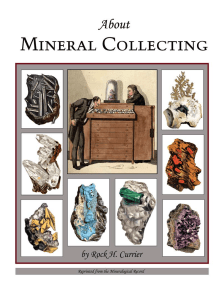
Our most popular publication for the beginning Mineral Collector
About Mineral Collecting could equally well be entitled An Insider’s Guide to Mineral Collecting, filled with the kind of rare and practical information that every collector needs to fully appreciate, understand and enjoy the uniquely interesting and complex hobby of mineral collecting. It is a collection of personal observations, ruminations, reflections, reminiscences, ramblings, digressions, grumblings, approbations, wisdom and advice gleaned from 50 years of experience collecting and dealing in minerals by Rock Henry Currier, prominent American dealer and collector. He’s been everywhere and seen it all — and is one of the more popular and entertaining writers ever to appear in the pages of the Mineralogical Record, from which these essays have been gathered.
Available as a Digital Download for just $20. Click HERE or the adjacent image for more information or to order.
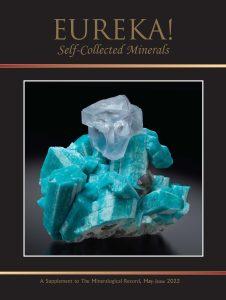
Do you like to go out and dig up your own minerals?
Eureka! is unlike any previous Mineralogical Record supplement in that its exclusive focus is field-collected specimens. In 400+ pages the supplement records the thrilling Eureka! experiences of more than 100 collectors from all over the world, with photos of some of the finest specimens they have dug from old and new workings of quarries and underground mines, in mine dumps, lonely fields, and remote outcrops, and wherever else their quests for minerals “in the raw” have led them. Entertaining stories about field-collecting adventures accompany more than 1000 photos of specimens, together, in many cases, with shots of the collectors’ own grinning, mud-covered selves excitedly holding out in their hands their newly extracted treasures.
Order the paper version for just $20 plus shipping and handling. Click HERE or the adjacent image to order.

For a little deeper dive
Surveying mineral collecting from its beginnings in the sixteenth century to the arbitrary date of 1799, this softcover book can be opened at random and immediately capture the mineral lover’s full attention. The appeal of this book to mineral collectors is obvious: for the person interested in mineralogy or geology, this book is hard to put down.
It is equally deserving of shelf space in libraries of other interests as well. It is an invaluable reference in the history of chemistry as well as in the development of mineralogy and geology.
There are 72 portraits of collectors, some in color and many quite rare and unfamiliar to the mineral community. There are 20 pictures of collection rooms and cabinets, and illustrations of 321 specimens—163 in color—mostly from old and difficult-to-access books and catalogs.
Available in paper or digital for just $24. Click HERE or the adjacent image to order.
Mineral Information you can Depend On
Timeless, trusted information about minerals for over 57 years!
These days, it seems that anyone with a question about minerals can simply connect to the internet and find whatever information they seek. This convenient approach, however, is increasingly fraught with the danger of receiving incorrect answers and misinformation. The internet is becoming a vast pool of bad data mixed in with the good, and for someone just starting out in mineral collecting, it can be nearly impossible to tell the difference. Separating the true from the untrue, fabricated, predatory, and deliberately misleading becomes increasingly difficult to do on one’s own.
What every mineral collector needs are reliable sources of information created and edited by experienced professionals. The most trustworthy articles follow professional standards for documenting their sources. The principle, supported by virtually all scientists, is simple: if readers wish to check and evaluate where an author’s information, ideas, and statements came from, they should be directed to the original source or sources for confirmation. Information that is not referenced to an earlier source represents the author’s own original contribution.
This is a great strength of the Mineralogical Record as a source of information for the collector. Every article is thoroughly vetted by knowledgeable reviewers and editors, and relevant references to previously published information on the subject are extensively documented for further study, should readers want to dig deeper. The authors, reviewers, and editors bring expertise to every article, providing a protective filter against bad data. And when an error does occasionally slip through, scientific publishing protocol requires that corrections be acknowledged and published.
Today’s mineral collectors have a choice about where they get their information: from the quick and easy, but often incomplete and unreliable, sources found online—or from an authoritative publication that serious collectors and leading connoisseurs have relied on for more than five decades.
Popular Minerals of the Mineral World
Most of us who came to mineral collecting through the academic side of the hobby are interested in all aspects of the mineral world—history, mining, geology, mineralogy, and crystallography. But many people are introduced to the hobby for a much simpler reason: the beauty and fascination of crystals.
Interest in particular minerals tends to wax and wane over the years, often influenced by new locality discoveries and availability. Some minerals, however, have enduring appeal. The various forms of quartz—colorless quartz, amethyst, citrine, and smoky quartz—will likely always be popular because of their abundance. Silicon dioxide, the chemical composition of quartz, is one of the most abundant mineral substances on Earth.
Other minerals remain consistently popular because of their rarity, desirability, and use in jewelry. These include gold and silver, which are actually native metals, as well as ruby and sapphire (varieties of corundum), emerald and aquamarine (varieties of beryl), and tanzanite (a variety of zoisite).
Within the collecting community, however, a mineral can also become “interesting” simply because it becomes popular. Interest can spread quickly through the sharing of collections, new locality discoveries, mineral shows, internet searches, and social media.
With all of this in mind, below are our informational offerings on five of the “most popular mineral species” currently being encountered by Mineralogical Record staff, collectors, and dealers at shows and through searches on the internet and social media.

Fluorite
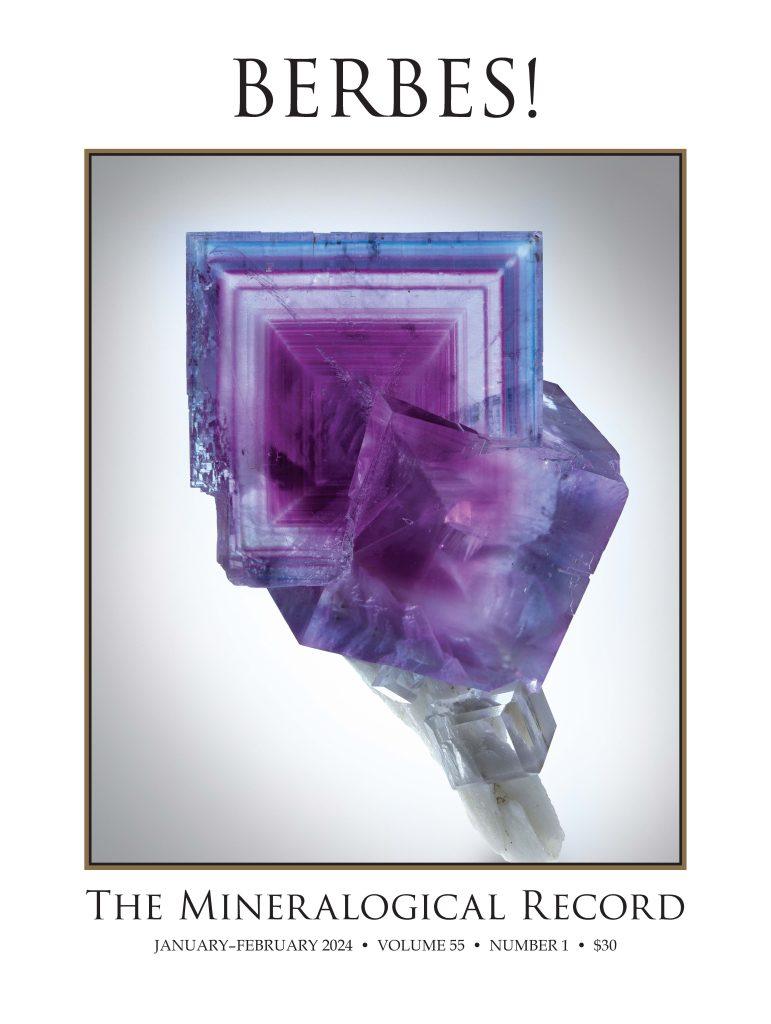
In the past 15 years, Fluorite has had a huge surge in popularity. There are many collectors who just collect fluorite as well as dealers who sell just fluorite. Images of fluorite are rampant on the internet and fluorite collections are displayed widely at mineral shows. It is a very multi-colorful, relatively abundant material that is also used for carving and some jewelry although it is relatively soft for everyday wear.
Shown here are two of our most popular fluorite issues. Click on the images for more information or search for many more issues on fluorite on our SEARCH THIS SITE link by typing in the keyword: fluorite.

Tourmaline
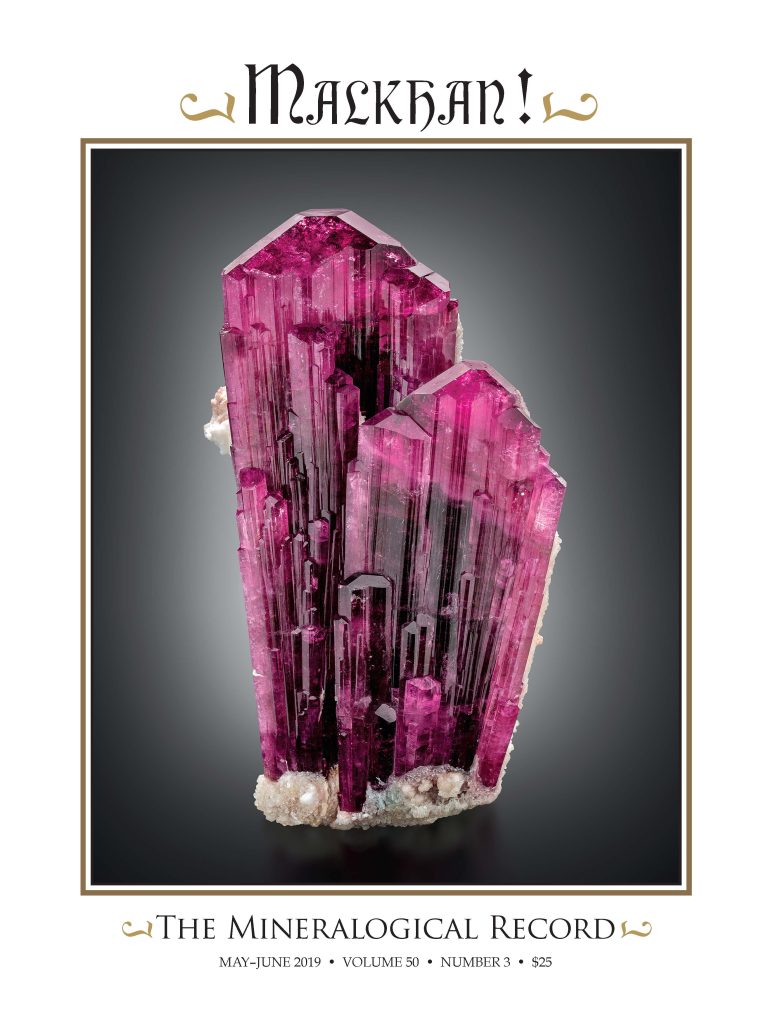
Tourmaline is a group of minerals of which there are many colors and varieties. Like fluorite, there are many collectors who just collect tourmaline as well as dealers who just sell tourmaline. Also like fluorite, images of tourmaline are found all over the internet and tourmaline collections are displayed widely at mineral shows. It is a very multi-colorful, relatively abundant material that is also used widely in jewelry.
Shown here are two of our most popular tourmaline issues. Click on the images for more information or search for many more issues on tourmaline on our SEARCH THIS SITE link by typing in the keyword: tourmaline.
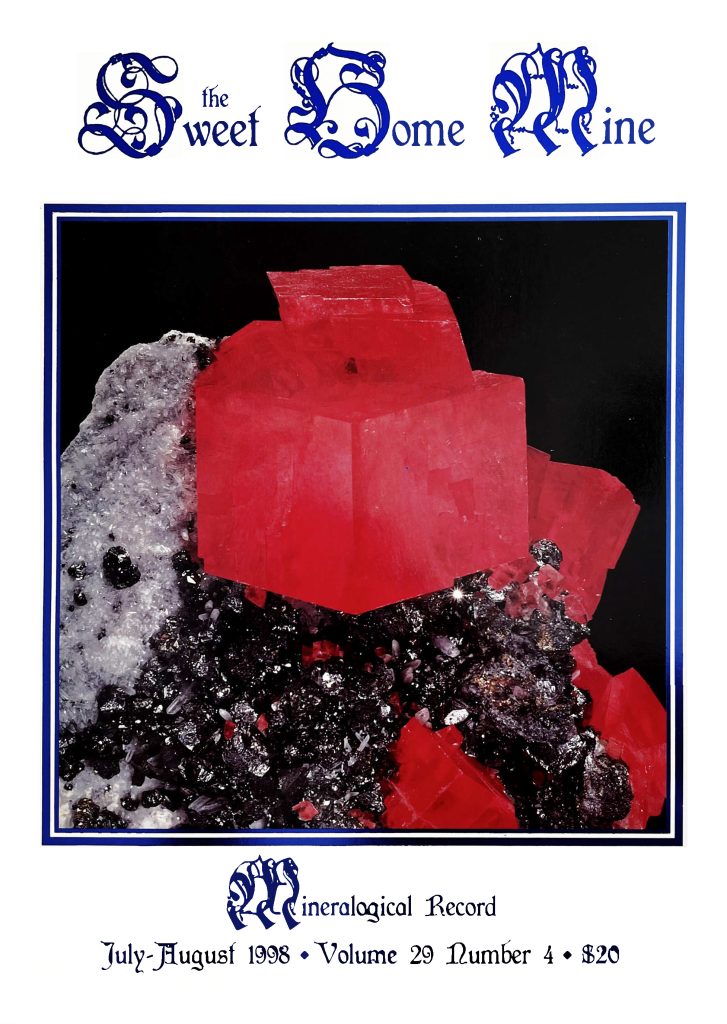
Rhodochrosite
Rhodochrosite from Argentina has always been popular as an ornamental stone for slabbing, carvings and cabochons, but for collectors of mineral crystal specimens, rhodochrosite from the South African Kalahari Manganese fields’ N’Chwaning mine first found in the mid 1970s were the epitome of interesting and colorful rhodochrosite crystals. But the popularity of rhodochrosite rose to new heights with new operations of the Sweet Home Mine in Alma, Colorado in the 1990s. Rhodochrosite’s popularity is owed to it’s phenomenal red color, gemmy-ness, and incredible crystal forms.
Shown here are our two popular rhodochrosite issues. Click on the images for more information or search for more issues on rhodochrosite on our SEARCH THIS SITE link by typing in the keyword: rhodochrosite.

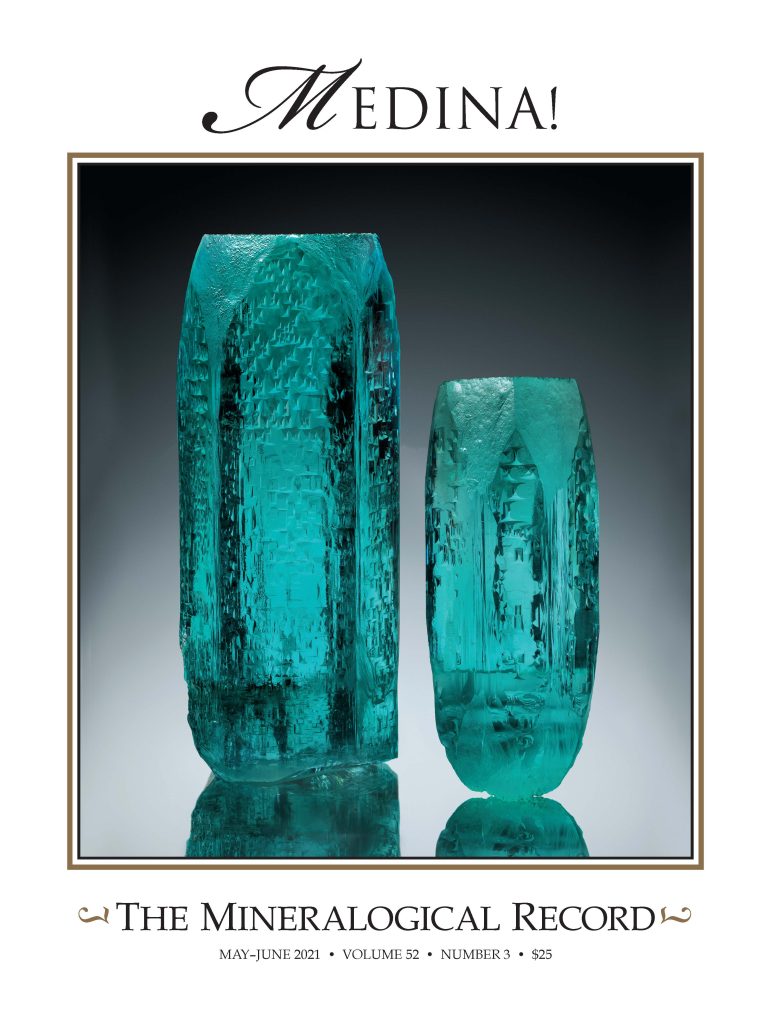
Beryl varieties Aquamarine, Emerald
Heliodor and Morganite
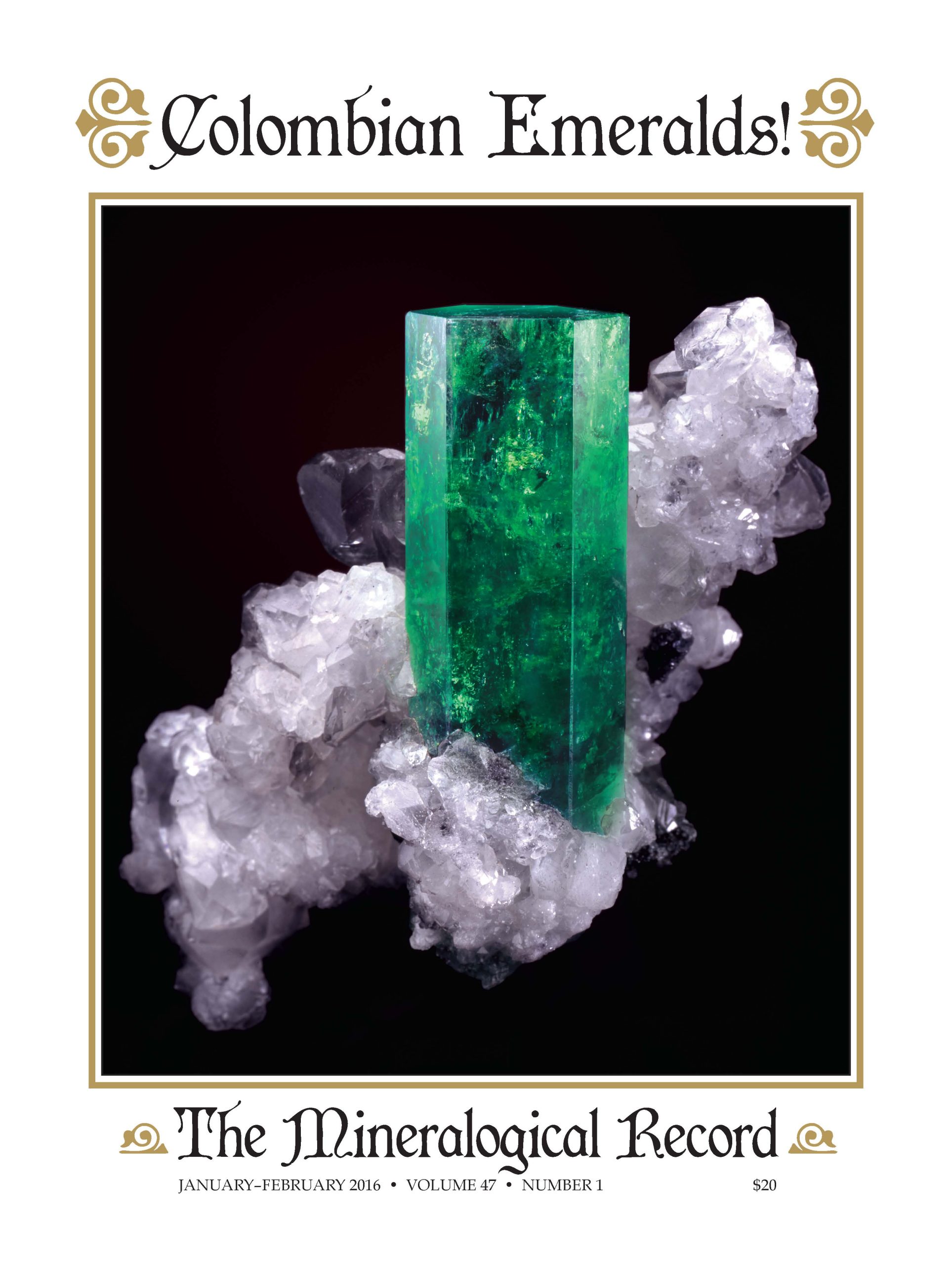
Beryl is a mineral that comes in a variety of colors: aquamarine (blue), emerald, (a green variety colored by chromium), heliodor (a yellow to yellow-green color), morganite (usually a pink to peachy-pink color) and also goshenite (colorless) and a green variety of beryl not colored by chromium. All varieties of beryl have enjoyed decades of use in jewelry and carvings, but the naturally elongated, highly-lustrous and intensely colored crystals of aquamarine, emerald and heliodor are a true sight to behold.
Shown here are issues on two of the most popular beryls. Click on the images for more information or search for more issues on beryl on our SEARCH THIS SITE link by typing in the keywords: beryl, aquamarine, emerald, heliodor or morganite.
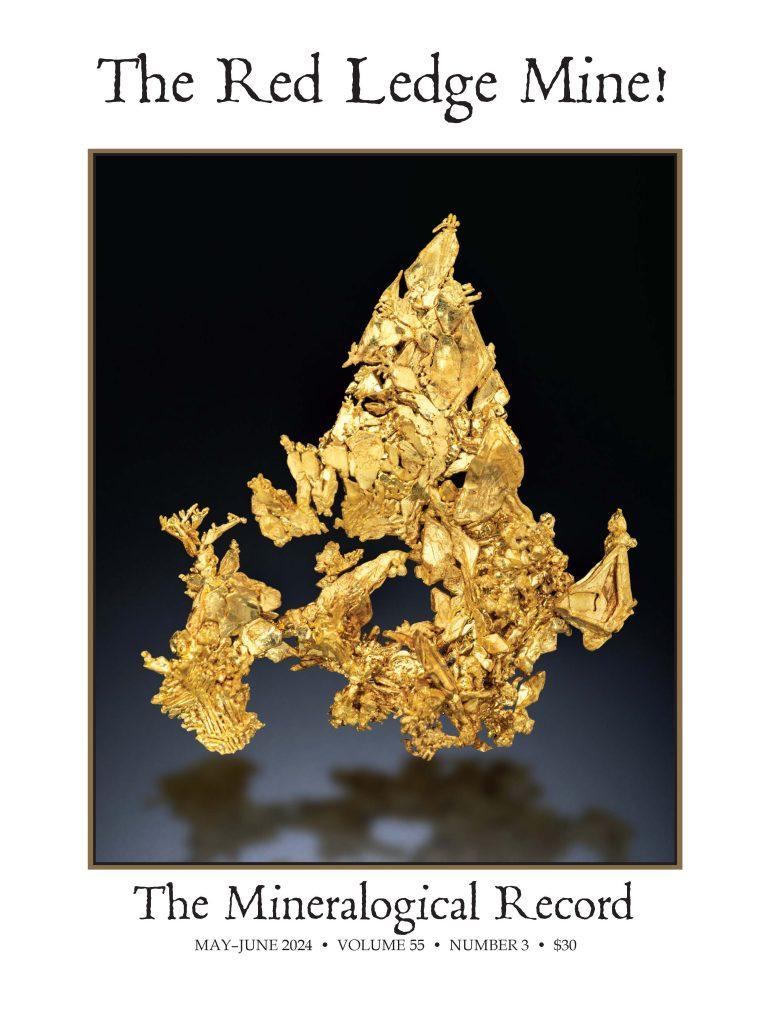
Gold
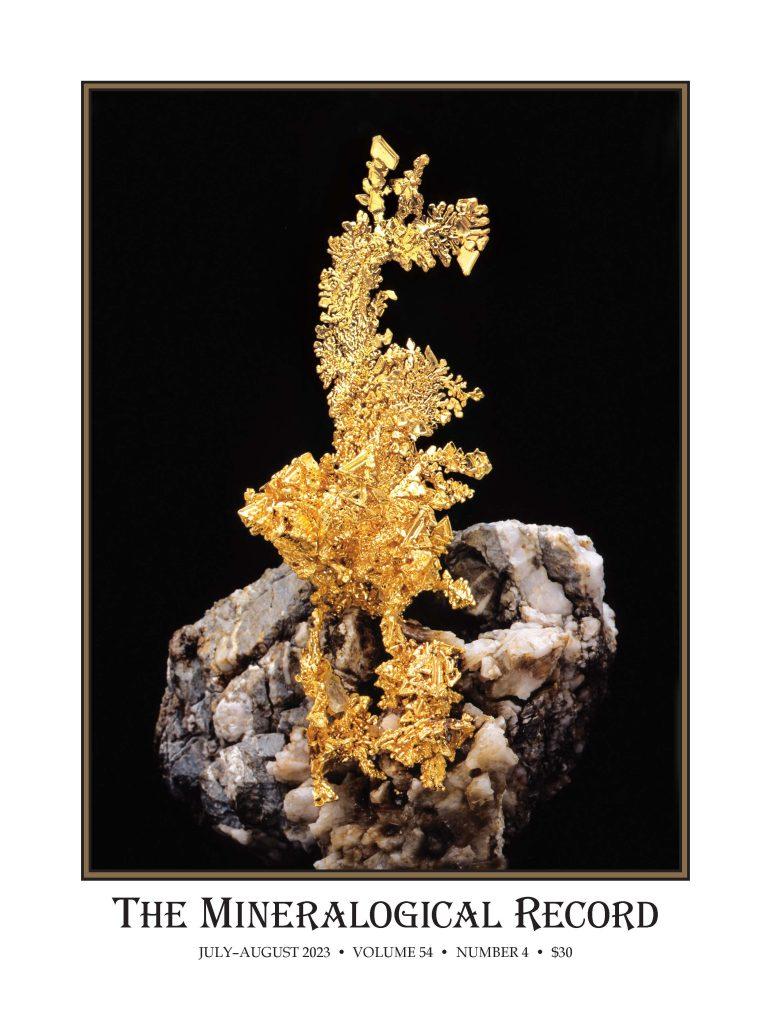
Gold is a native metal which we normally see mined for use in jewelry and coins. Specimens of crystallized gold are stunningly beautiful and are highly sought after by mineral collectors all over the world. Unlike jewelry, a crystallized gold specimen is generally pure and will never tarnish or rust, enduring forever in a display cabinet, shimmering like the sun.
Shown here are two of many of our issues on gold. Click on the images for more information or search for more issues on gold via our SEARCH THIS SITE link by typing in the keyword: gold.
Supplements (Supplemental Editions)
Free to Subscribers
Supplements can provide new collectors with insight into what constitutes an aesthetically pleasing mineral specimen, a well-balanced mineral collection, as well as learning about localities, mining and rare species. It’s like going into someone’s home (or a museum) and receiving a highly curated tour with special information and a personal story behind every piece.
The Mineralogical Record has a long history of providing its subscribers with free supplementary publications supported entirely by outside funding. The first of these were 32-page supplements on the collections of the Carnegie Museum of Natural History in Pittsburgh and the Houston Museum of Natural Science in 1990 and 1992 respectively. These were funded by the museums (including trips by the editor to personally select the minerals that would be shown). A supplement in the form of an exhibition catalog based on the Bisbee exhibition at the University of Arizona appeared in 2012. And in 2015 the University of Delaware supported a supplement featuring its own mineral museum, the Legacy of Irenée du Pont.
In 2007 came a ground-breaking supplement devoted to Ikons, Classics and Contemporary Masterpieces of Mineralogy, a 192-page primer for the building of an elite collection that immediately became a must-have reference for advanced mineral collectors everywhere. Extraordinary individual private collections likewise became the focus of supplements as well, beginning with the collections of Miguel Romero (Mexican minerals) and Marc Weill in 2008, then Desmond Sacco’s African minerals in 2014, Will Johnson’s exquisitely perfect crystals in 2023, and the aesthetically oriented collection of Jack Halpern in 2025. Other topical supplements have featured, at least in part, the collections of particular individuals; these include the supplement on the classic minerals of Northern England (based on Lindsay Greenbank’s collection, 2010), Thumbnail collecting (Alex Schauss collection, 2022), Scott Rudolph’s magnificent Tsumeb collection (2024), classic European minerals (Kay Robertson, 2025), and pseudomorph collecting (Stretch Young’s collection, 2025). A unique supplement featuring specimens from the Rob Lavinsky collection is devoted to the minerals of China (2013)—it also appeared later in a Chinese language edition.
A large number of supplements have featured minerals from (mostly) private collections in particular geographical areas, wherein each collector has his or her own chapter. These include Texas (three supplements, in 2009, 2014 and 2020, totaling 772 pages!), Italy (2011), Arizona (in 2013 and 2020), San Francisco (2013), Colorado (2014), the American Midwest (2015), Austria (2015), the American Northeast (2016 – 460 pages!), California (2017), the Pacific Northwest (2019), and Australia (2020). A 2022 supplement (entitled Eureka!) is devoted strictly to private collections of self-collected specimens.
Taken together, the 35 supplements published between 1990 and 2026 constitute nearly 6,000 pages of good reading, high-quality information and spectacular mineral photography, all provided free of charge to our subscribers.
Read more about all of our supplements HERE

Subscribe to our magazine or look at samples HERE
A yearly bi-monthly subscription (6 issues a year + bonus supplements) currently starts at just $54 per year